
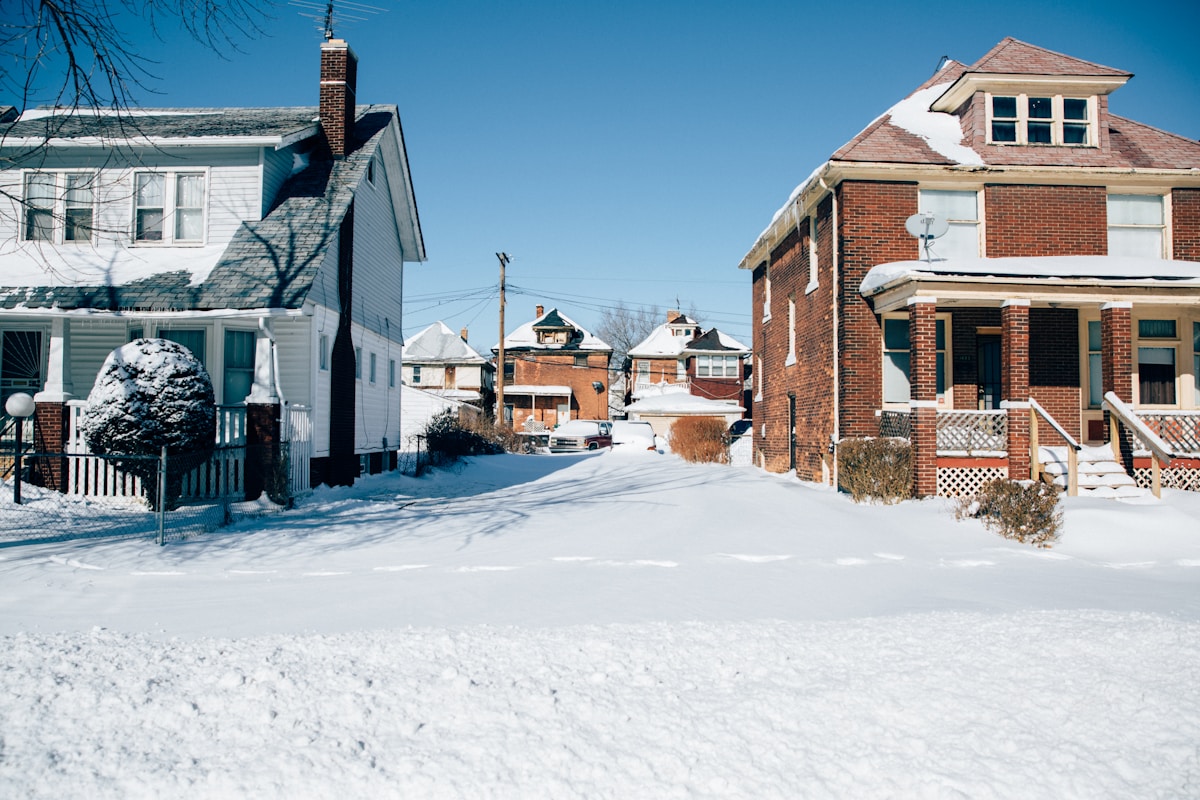
HVAC companies in Western New York do honest work. Most of them are legitimate businesses with skilled technicians charging fair prices for real expertise. But here's the thing they'd rather you didn't discover: a significant percentage of the service calls they make every winter — especially the "furnace won't turn on" calls — have causes that a homeowner can identify and fix in under 30 minutes, for free.
The average furnace service call in Buffalo costs $150–$250 for labor, plus parts if needed. When the technician arrives and cleans a flame sensor with a piece of steel wool, then watches the furnace start up, that's the job. It takes 10 minutes. You just paid $175 for 10 minutes of work you could have done yourself.
This article teaches you how to do these repairs yourself — safely, correctly, and with full knowledge of when the job genuinely does require a professional.
Fix #1: Clean the Flame Sensor (Eliminates Most "Won't Ignite" Calls)
What it is: The flame sensor is a thin metal rod — usually about 2 inches long, sometimes with a white porcelain base — mounted near the burner in your furnace. Its job is to confirm that the burner has actually lit when the furnace fires. Over time, oxidation builds up on the rod's surface. When this oxidation layer gets thick enough, the sensor can no longer "see" the flame, and the furnace shuts itself off as a safety measure.
The result: your furnace tries to start, the burner lights briefly, and then the whole system shuts down. It may try two or three times and then go into lockout mode. You call for service.
The fix:
- Turn off power to the furnace at the breaker or the furnace's own power switch.
- Turn off the gas supply to the furnace.
- Let the furnace cool for 15 minutes.
- Open the furnace access panel (usually just lifts off or has two screws).
- Locate the flame sensor — follow the wires from the control board; the sensor is typically a small metal rod near the burner assembly, held by a single screw.
- Remove the one screw and gently pull the sensor out.
- Using a piece of fine steel wool or a lightly abrasive pad (not sandpaper — too aggressive), gently rub the metal rod portion until it looks clean and shiny. This takes 30 seconds.
- Reattach the sensor, close the panel, restore gas and power.
- Set your thermostat to call for heat. The furnace should light and stay on.
- Turn your heat on so the system is circulating.
- Wait until the radiators are warm (about 15–20 minutes).
- Locate the bleed valve — a small square or slotted valve at the top, usually on one end of the radiator.
- Place a small container or towel below the valve to catch water.
- Using a radiator bleed key (available at any hardware store for $2–$3) or a flathead screwdriver, open the valve slowly counterclockwise.
- You'll hear a hiss of air escaping. Hold the valve open until water starts to dribble out steadily — this means the air pocket is gone.
- Close the valve snugly. Don't overtighten.
- Locate the condensate drain line — follow the white PVC tube from the furnace.
- Locate the small condensate trap (a U-shaped loop in the line, usually clear plastic) and the drain end.
- Disconnect the line at the furnace end (it typically just pulls off a fitting).
- Use a wet/dry shop vac to suck from the drain end — this clears most simple clogs.
- Reconnect the line and restore power to the furnace.
- Pour a diluted bleach solution (1 tablespoon bleach per cup of water) into the line seasonally to prevent algae growth.
- You smell gas. Leave the house immediately. Call National Fuel Gas at 1-800-365-3234 [1] (24-hour emergency line) or 911.
- Your carbon monoxide detector goes off. Leave and call 911. A cracked heat exchanger can leak CO — this is a life-threatening emergency.
- You see a cracked heat exchanger. Look inside your furnace with a flashlight — if the metal heat exchanger has visible cracks, the furnace must be shut down and replaced or repaired by a professional.
- The furnace error code indicates a pressure switch, draft inducer, or control board issue. These require professional diagnosis.
- Any gas line work. Touching actual gas line connections or valves beyond shutoffs requires a licensed technician.
- National Fuel Gas — Customer service and 24-hour emergency line: 1-800-365-3234. nationalfuel.com
- U.S. Department of Energy — Furnaces and Boilers: Replace furnace filters every 1–3 months depending on filter type. energy.gov
- Erie County HEAP Emergency Benefits — Help paying for heating emergencies. erie.gov/heap/emergency-benefits
- NY State EmPower New York Program (NYSERDA) — Free weatherization/insulation for eligible low-income households. nyserda.ny.gov
Safety note: If you smell gas at any point, stop immediately, leave the house, and call National Fuel Gas at 1-800-365-3234 [1] or 911. Never work on gas equipment while a gas odor is present.
Fix #2: Use the Right Filter (MERV 8–11 Is Your Target)
Walk into any Home Depot or Lowe's in the Buffalo area and you'll find furnace filters labeled with MERV ratings from 1 to 16. MERV stands for Minimum Efficiency Reporting Value — it measures how fine a particle the filter captures. Higher is better for air quality, right?
Not for your furnace.
Most residential gas furnaces are designed for moderate air restriction. Filters with very high MERV ratings — MERV 13 and above — are so dense that they restrict airflow significantly. When airflow drops, your heat exchanger can overheat, your system runs longer to achieve the same temperature, and you can actually shorten the life of your blower motor.
The optimal range for most Buffalo residential furnaces is MERV 8–11. This provides meaningful filtration for dust, pollen, and pet dander without the airflow restriction of higher-rated filters.
Also critical: change your filter on schedule. A dirty filter of any MERV rating becomes more restrictive over time. For most WNY homes, every 60–90 days is the right interval during heating season. [2] Hold your current filter up to a light — if you can't see through it easily, change it now.
Pleated filters in the MERV 8–11 range are available at Home Depot (Delaware and Elmwood locations), Lowe's, and hardware stores throughout Erie County for $8–$18.
Fix #3: Bleed Your Hot Water Radiators
If you have a hot water heating system — the kind with cast iron radiators in each room — and one or more rooms feel cold even when the heat is running, air trapped in the radiator is likely the cause.
Hot water radiators circulate heated water from a boiler. Over time, air accumulates in the system and gets trapped at the top of individual radiators. Air is less efficient than water at transferring heat, so the affected radiator runs cool even with hot water circulating below.
The fix — bleeding the radiator:
After bleeding all affected radiators, check your boiler's pressure gauge. If bleeding released significant water along with the air, you may need to add a small amount of water to the system via the boiler's fill valve. Consult your boiler manual or confirm this step with a plumber.
Fix #4: Clear the Condensate Drain Line
High-efficiency gas furnaces (90%+ AFUE rating — if your furnace has a white PVC exhaust pipe rather than a metal chimney flue, you have one) produce water as a byproduct of combustion. This water drains through a condensate line — a small plastic tube — to a drain or a condensate pump.
When this line clogs with algae, sediment, or debris, the furnace's safety sensor detects the backup and shuts the system down. This is one of the most common autumn furnace failures in WNY.
The fix:
When to Actually Call a Pro
These are the situations where you stop and call a licensed HVAC technician — no exceptions:
National Fuel Gas free furnace inspection: National Fuel offers a free furnace inspection through their Home Energy Efficiency program for qualifying customers. Call 1-800-365-3234 [1] to ask about scheduling. This is a legitimate service, not a sales pitch — a technician will check safety, efficiency, and flag any issues. [3]