
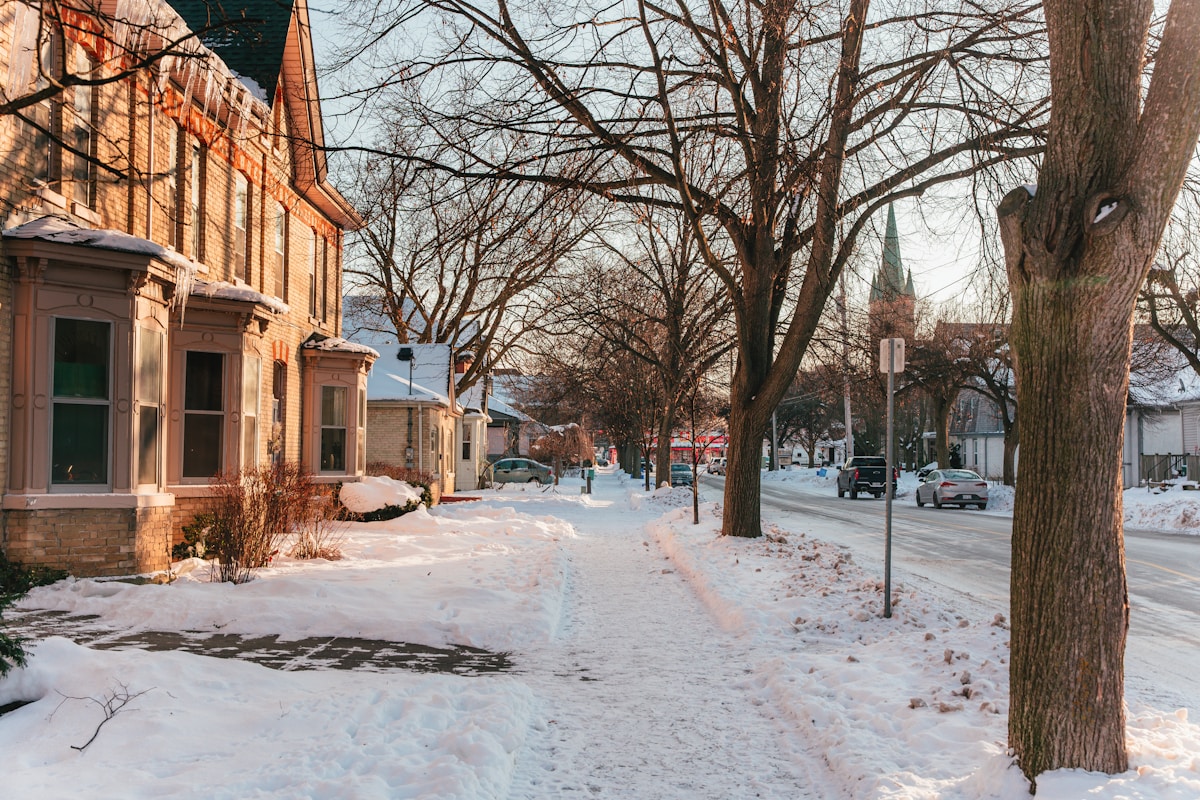
Buffalo winters don't ease into the cold. Lake-effect storms can dump two feet of snow before Thanksgiving, temperatures can drop below zero in January, and power outages from heavy snow are a real annual risk. [4] Western New York homeowners who treat November 1 as the true deadline for winter prep — not December, not after the first big storm — consistently come through the winter with fewer emergencies and lower bills.
Here are the nine tasks that matter most. They're ranked roughly by impact.
Task 1: Insulate Pipes on Exterior Walls
Buffalo's frost line is 48 inches deep — meaning the ground freezes to that depth in a severe winter. That's one of the deepest frost lines in the continental United States outside of the northern tier of Minnesota and Maine. For homeowners, this means that pipes running through exterior walls, unheated basements, crawlspaces, or garages are at real risk.
Foam pipe insulation is inexpensive (about $1–$2 per linear foot at Home Depot or Lowe's) and installs with no tools in most cases — it simply splits along one side and wraps around the pipe. Pay particular attention to:
- Pipes under sinks on exterior walls (the kitchen sink on an outside wall is a common freeze point)
- Pipes in unheated garages or attached storage areas
- Any pipe running through an uninsulated crawlspace
If you've had a pipe freeze in a specific location in a previous winter, that location needs insulation now — it will freeze again. The cost of a burst pipe in WNY (water damage, plumber, drywall repair) easily runs $3,000–$15,000. Foam pipe insulation costs $30–$50 for a full house.
Task 2: Check Your Attic Insulation
The attic is where most Buffalo homes lose the majority of their heat. Warm air rises, and if your attic isn't well-insulated, that warmth goes straight through the roof — heating the sky while you pay National Fuel to replace it.
The recommended R-value for attic insulation in Western New York's Climate Zone 6 is R-49 to R-60. [1] Many older homes in Buffalo, Cheektowaga, Kenmore, and surrounding communities have R-19 to R-30 — sometimes less. You can check by going into your attic with a ruler. Loose-fill fiberglass insulation should be at least 15–16 inches deep to hit R-49; blown cellulose should be about 12–14 inches. If your insulation is 6 inches deep, you're losing significant heat.
Adding attic insulation is one of the highest-return improvements a WNY homeowner can make. A professional blown-in insulation job typically costs $1,500–$3,500 for an average Buffalo home and pays for itself in fuel savings within 3–7 years. [3]
Free option: If your household income qualifies, the NYS Weatherization Assistance Program (1-800-342-3722) provides free attic insulation. [2] Apply before the season fills the schedule.
Task 3: Weatherstrip Your Doors
Weatherstripping — the foam, rubber, or felt seal around the edges of your exterior doors — compresses and wears out over time. When it fails, you get a gap that lets cold air directly into your home. Energy experts estimate that a poorly sealed door can account for up to 30% of a home's heat loss.
Test every exterior door: close it on a piece of paper. If you can pull the paper out easily, the seal is inadequate. Replace the weatherstripping along the sides and top (it peels off and presses back on, or is held by small screws) and install a door sweep along the bottom if there's a visible gap. A complete door weatherstripping kit costs $10–$20 at any hardware store and takes about 30 minutes per door.
Pay particular attention to the door between your attached garage and your home — this is one of the most common cold-air entry points in WNY homes.
Task 4: Reverse Your Ceiling Fans
Most ceiling fans have a small switch on the motor housing that reverses the blade direction. In summer, fans run counterclockwise to push air down and create a cooling effect. In winter, switch to clockwise at the lowest speed setting.
A clockwise-running fan at low speed gently pushes the warm air that has risen to the ceiling back down along the walls and into the living space. In rooms with high ceilings — common in older Buffalo homes — this can make a noticeable difference in comfort and allow you to keep the thermostat slightly lower.
The switch is on the body of the fan, just above where the blades attach. Most fans also allow this setting to be changed from a remote control or app in newer models.
Task 5: Winterize Outdoor Faucets and Hose Bibs
Exterior faucets — the spigots on the outside of your house where you attach a garden hose — are directly exposed to freezing temperatures. If water remains in them and the line behind them, they can freeze and burst, causing a pipe failure inside your wall.
The steps:
- Remove any garden hoses. A hose left attached traps water in the faucet and prevents it from draining.
- Close the interior shutoff valve for the outdoor faucet (usually in the basement, near where the line exits through the foundation wall). If your faucets are "frost-free" sillcocks (the valve is set back 8–12 inches inside the wall) and you removed the hose, they're largely self-protecting — but still close the shutoff if you have one.
- Open the outdoor faucet to release any remaining pressure after closing the interior shutoff.
- If you have an in-ground irrigation system, have it blown out by a landscaper before the first hard freeze.
- Install a fresh filter (MERV 8–11 for most homes — see the furnace maintenance article for the full explanation).
- Clean the flame sensor (see furnace maintenance article) if your furnace had any start-up issues last winter.
- Clear the condensate drain line if you have a high-efficiency furnace (white PVC exhaust pipe).
- Test the system by running it for 30 minutes on a cool October day.
- Run it for 15–20 minutes in October to confirm it starts and runs properly.
- Change the oil and spark plug if it hasn't been done in the past season.
- Store fresh gasoline (with fuel stabilizer added) to prevent stale fuel issues.
- Confirm you have enough extension cords and know how to run your refrigerator, space heater, and essential electronics safely.
- At least 72 hours of non-perishable food and water for your household
- Medications refilled and current
- Flashlights with fresh batteries (not just phone flashlights, which drain battery quickly)
- Extra blankets and warm layers
- Rock salt or ice melt for your walkways (harder to find once a storm hits)
- A battery-powered or hand-crank weather radio for WBEN (930 AM) alerts during outages
- U.S. Department of Energy — Weatherization and home insulation guide. energy.gov/energysaver/weatherize
- NYSERDA EmPower New York — Free weatherization for income-eligible NY homeowners. nyserda.ny.gov
- Erie County HEAP — Heating assistance for income-eligible households. erie.gov/heap/regular-benefits
- National Weather Service Buffalo — Average annual snowfall and climate data. weather.gov/buf
- Insurance Institute for Business & Home Safety — Ice dam prevention guidance. ibhs.org
Task 6: Clean Your Gutters — Before the First Freeze
Ice dams are a serious and expensive problem in WNY (see the companion article for full detail). One contributing factor is gutters full of leaves and debris. Clogged gutters cannot drain meltwater properly, which contributes to ice formation at the roofline.
Clean your gutters in October — after the leaves fall, before the first hard freeze. If you're not comfortable on a ladder, gutter cleaning services in the Buffalo area typically run $75–$175 for an average house and take about an hour.
While you're at it, check that downspouts discharge water at least 4–6 feet from your foundation. Water pooling against your foundation freezes and expands, which can cause foundation cracks over time.
Task 7: Service Your Furnace (Or Do the DIY Steps Yourself)
Before the first cold snap, your furnace needs to be ready. At minimum:
National Fuel offers a free furnace safety inspection for qualifying customers — call 1-800-365-3234 in October to schedule before the season books up.
Task 8: Prep Your Generator
Power outages during lake-effect storms are a regular WNY reality. The November 2022 storm that buried parts of Erie County under 5 feet of snow is a reminder of what extreme events look like — but smaller outages happen every winter.
If you have a portable generator:
Critical safety rule: Never run a generator inside the house, in a garage, or in any enclosed space — even with the door open. Carbon monoxide from generators kills people every winter in WNY. Operate generators at least 20 feet from any window or door.
Task 9: Stock Emergency Supplies Before the First Storm
This is the one most people skip until they're already in a storm:
The cost of being prepared is $50–$100. The cost of not being prepared during a multi-day WNY lake-effect event can be much higher.